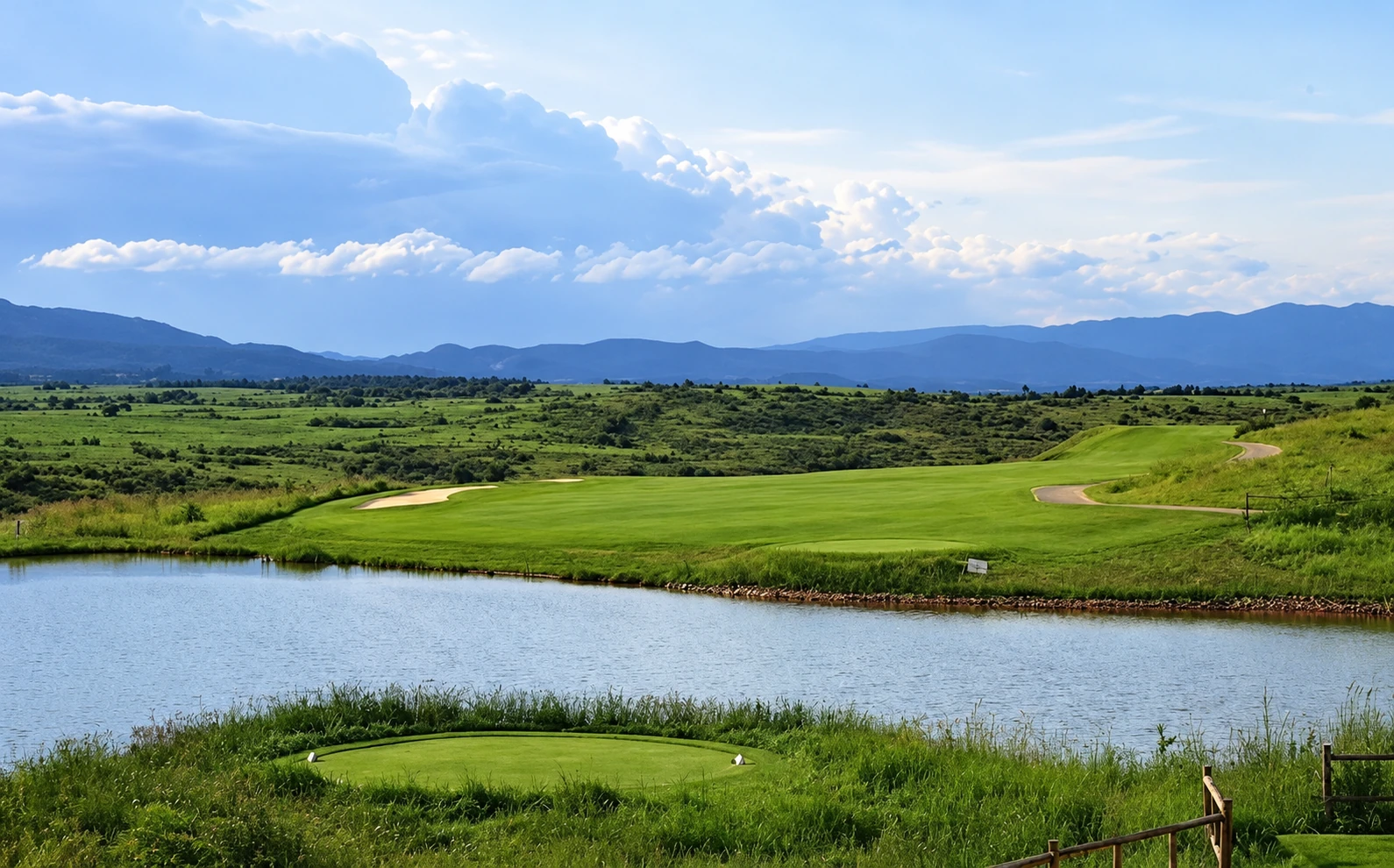
Built by a golf enthusiast to bring the game within reach of local people, Meadow followed the contours of the pasture and kept its prices affordable throughout its life.
Golf within the pasture · Historical photo taken before the course closureSupplied archival photograph · Photographer unverified · AI-upscaled
Former layout
18 holesPar 72
Trial opening
1 June 2009Reported by period sources
Longest preview tees
6,757 yardsYellow · Supplied hole previews
Created by
Owner & staffGolf fitted to existing pasture
Why Meadow existed
A love of golf. A game to share.
One enthusiast’s answer to the cost of playing golf in Kunming.
Kunming Meadow began with a golf enthusiast who wanted to make the game accessible to local people priced out of the city’s more traditional clubs. His response was to build a course himself, with his staff, and make affordable everyday golf its purpose.
Trial play began on 1 June 2009. Meadow’s public-course approach gave local golfers a less expensive way to get out for a round, practise and keep playing. Accessible prices remained central throughout its operation.
The club’s Chinese name, 牧场, means pasture or ranch. Also recorded in English as Kunming Ranch and Meadow Lake, it was a course whose identity came from its setting and the people who made it.
Built by the people who played
Let the land shape the golf.
The holes followed the pasture’s existing contours.
A February 2016 feature in Golf magazine describes the owner and staff creating the course without a commissioned course architect. They worked with rented pasture and the machinery available to them, using very little earthmoving.
The aim was to fit eighteen holes into the ground already there. Slopes, hollows and changes in height became part of the routing. This approach kept construction simple and helped support the club’s affordable public-golf model.
That decision also gave Meadow its character. Blind shots, uneven lies and exposed stretches of fairway asked golfers to understand the terrain. The landscape supplied much of the challenge.
The club credited its own Meadow Golf Course Design Team. Behind that name was an owner and a group of staff turning enthusiasm for the game into a place where others could play.
A later Sina account makes the owner’s attachment to the ground especially clear: he preferred to alter the routing rather than reshape the land. Its blind shots were part of that decision to retain the pasture’s original contours.
Keeping the game within reach
Affordable golf was the point.
Low prices were part of Meadow’s purpose from opening to its later years.
The modest clubhouse, straightforward facilities and approach to construction served the same ambition: to put a round of golf within reach of more local players. The money golfers spent bought time on the course and a chance to enjoy the game.
Period records show that commitment at different stages of its life. Sina’s 2010 feature reported trial rates of RMB 300 on weekdays and RMB 400 on holidays. A September 2020 reopening announcement advertised subsequent rates of RMB 280 on weekdays and RMB 380 at weekends, alongside a one-day reopening offer.
The 2016 magazine feature also described regulars playing 36 or even 54 holes on the club’s Tuesday unlimited-play days. Meadow gave keen local golfers somewhere they could return to often.
These are historical advertised prices, with different conditions and offers, rather than current rates or a continuous price list.
How the idea played
Natural ground. Plenty of character.
The result was an inland course often described by writers as “highland links”: open grassland, thick rough and wind, with a strong sense of the pasture around it.
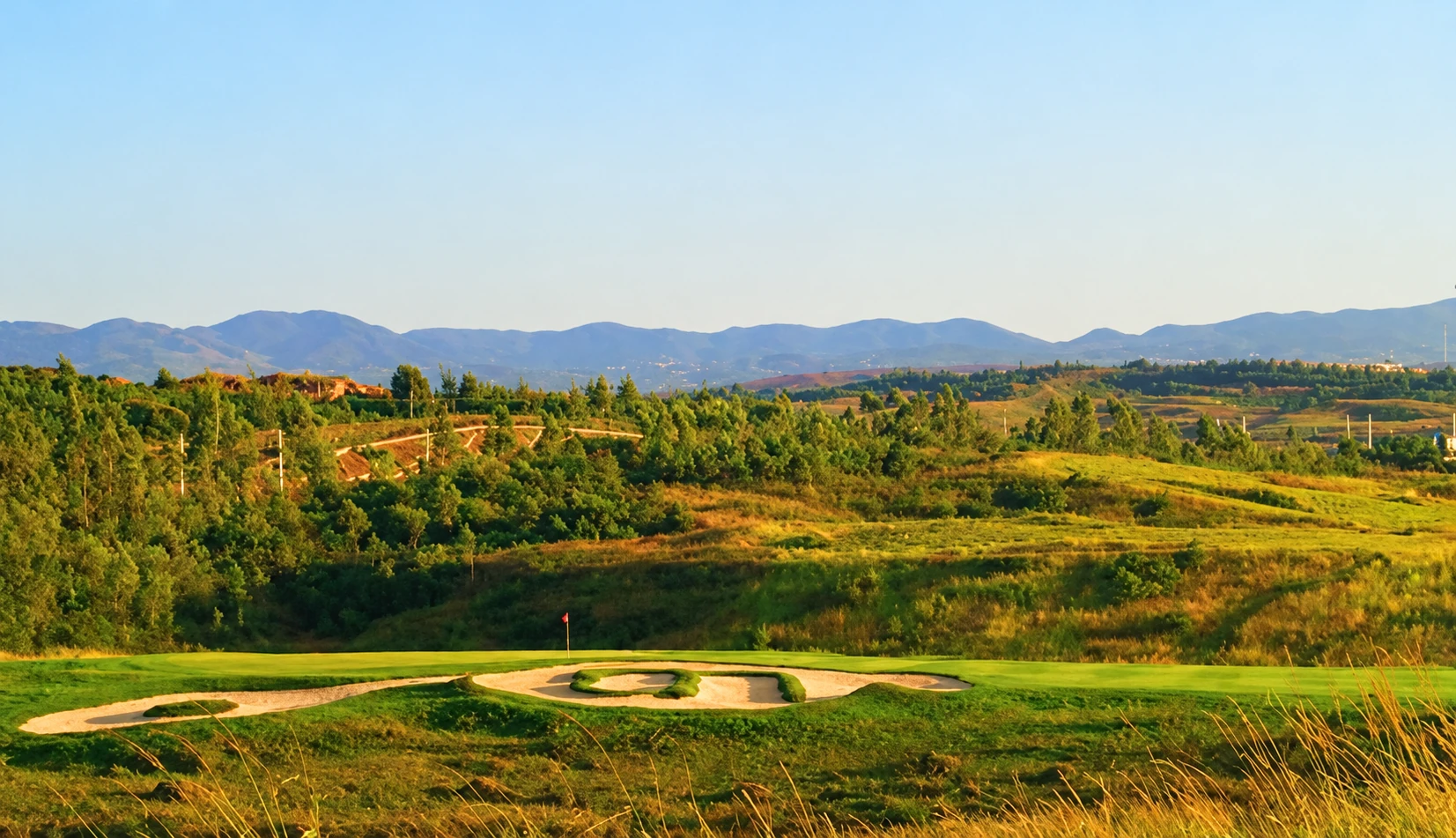
Golf007’s 2013 review describes narrow corridors, sand and small, contoured greens. The 2016 magazine account distinguishes a gentler front nine from a higher, more exposed back nine, where the wind and deceptive sightlines made position especially important.
Simple construction did not mean easy golf. Meadow rewarded players who learned its contours, chose their landing areas carefully and used their imagination.
The owner-built course
Fairways within the pasture.
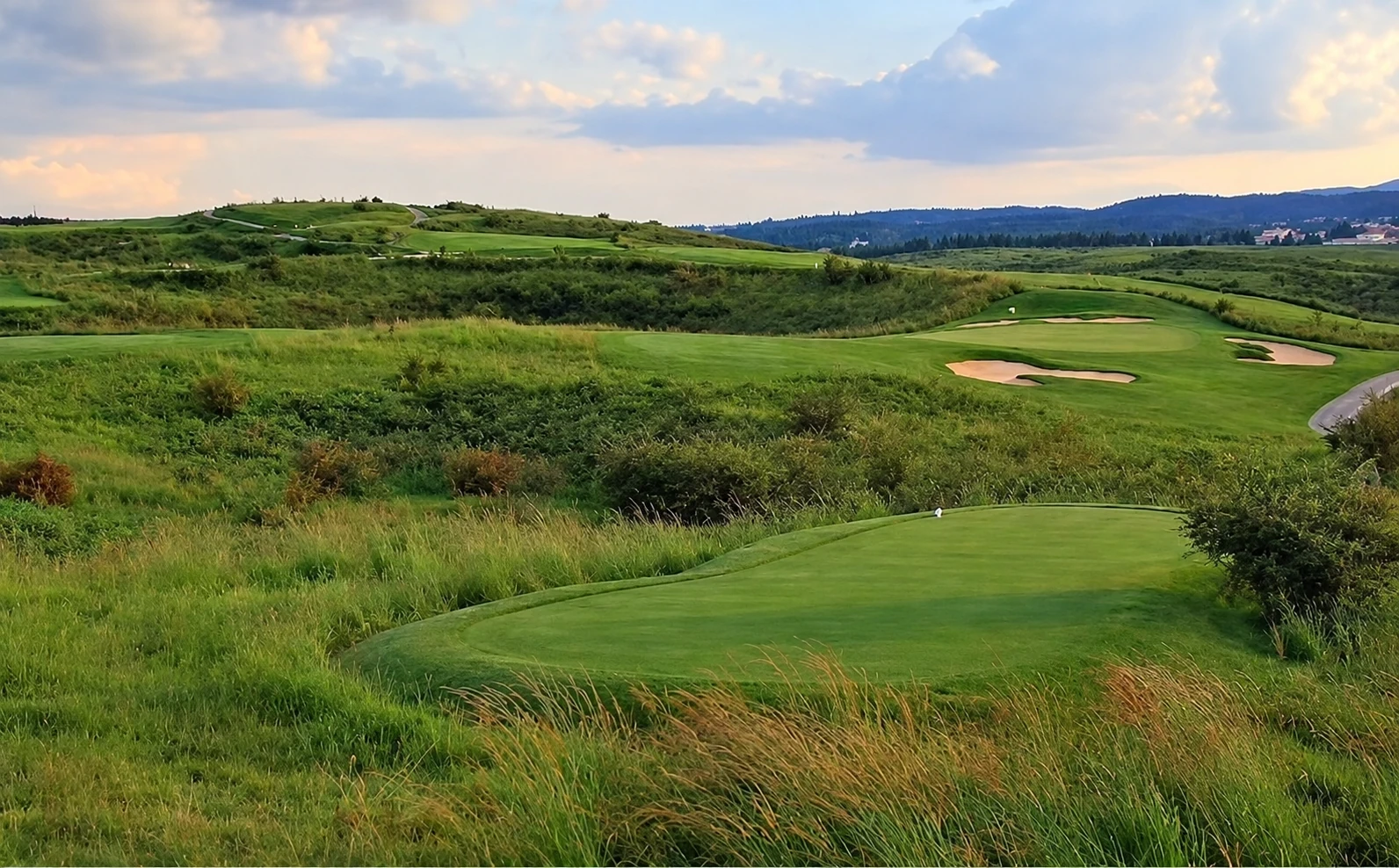
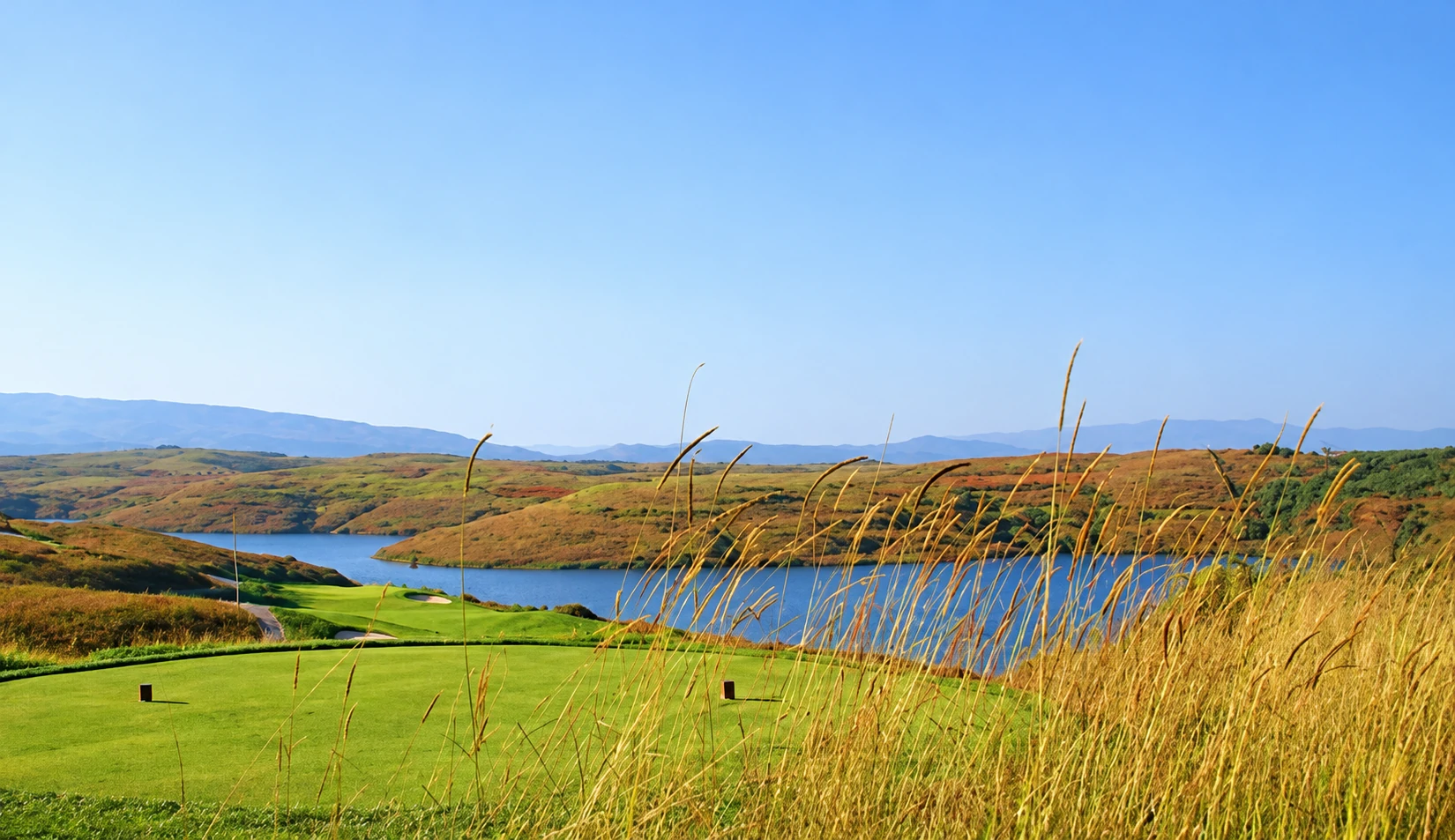
Archival photographs accompanying the 2020 reopening post
Water beside the playing ground.Archival image supplied with the reopening post · Photographer uncredited · AI-upscaledFairways, bunkers and the open horizon.Archival image supplied with the reopening post · Photographer uncredited · AI-upscaledA green folded into the natural contours.Archival image supplied with the reopening post · Photographer uncredited · AI-upscaled
Sina’s playing account describes a hidden green, tall pasture on the left and trees beside the right-hand fairway. Beyond the deceptive tee view, the landing area opened out and the green sat in a hollow.
This is the first hole in that historical review. The supplied preview A1 is a par 5, so the older description and yardage are not applied to the scorecard.
04
Beside the reservoir
Landscape highlight
The club profile on Tang Golf places the fourth beside Bajia Village Reservoir, looking across to a livestock farm and distant mountains.
07
A deceptive downhill drive
Par 4 · Golf magazine, 2016
From the elevated tee, the apparent centre of the fairway could send a drive towards water on the right. The magazine describes the line over the left-side fairway bunker as the better route.
08
A short par 4 with a choice
Converted from a par 3 · By 2016
The magazine records a former par 3 extended into a short par 4 of a little over 200 yards. A short-iron lay-up left a controlled approach; attacking the green brought a gully in front into play.
09
The sharp left turn
Risk and reward
Tang Golf describes an almost right-angle dogleg left. Sina’s 2010 account identifies it as a par 4, with a direct attack bringing rough and sand into play. A safer route offered a conventional approach.
11*
Wind across the water
Earlier layout · Par 5 · Sina, 2010–2011
Period reports describe the earlier eleventh as a long par 5, with wind from the lake on the left. A 2011 account adds a sharply left-sloping stretch of fairway above sand, thick grass and the reservoir. Preview B2 (hole 11 in the scorecard) is a par 3; this description is kept separate.
* The first and eleventh follow earlier published numbering, which differs from the supplied digital previews. The eighth was also converted from a par 3 to a par 4. These accounts record different versions of the course; historical yardages are not substituted into the preview-based scorecard.
The course before closure
Pasture, water and sand.
Historical photos taken before the course closure
Water among the grassland.Supplied archival photograph · Hole number unverified · AI-upscaledA green following the lie of the land.Supplied archival photograph · Hole number unverified · AI-upscaledThe earlier eleventh hole · Sina’s 2010 caption.Archival photo: Sina Sports · Earlier numbering · AI-upscaled
The historical layout
18-hole scorecard.
Par 72 · All distances in yards
Reconstructed from the 18 supplied AIGolf hole previews. A1–A9 are shown as holes 1–9 and B1–B9 as holes 10–18. Tee colours follow the previews, including yellow for the longest tees.
Source: AIGolf hole-preview screenshots supplied to Play Yunnan Golf. Front nine: par 36; back nine: par 36. This is a transcription of the surviving digital previews, rather than a scan of an original printed club scorecard. Stroke indexes were not shown.
Earlier length and numbering records
The club’s October 2013 profile lists 6,381 yards, while a secondary directory lists 6,980 yards. Neither equals the four totals calculated from these previews. They are retained as separate historical records; the available material does not explain the differences.
The 2016 magazine feature describes the eighth as a par 4 converted from a par 3. Preview A8 also shows par 4. An earlier Tang Golf description calls its eleventh a par 5, whereas preview B2 (hole 11 here) is a par 3. No matching between those two versions of the eleventh is assumed.
The earlier Sina review describes hole 1 as a par 4 of 327 yards from the blue tee, and hole 2 as a par 5. The digital previews instead label A1 par 5 and A2 par 3. Without a dated routing comparison, no renumbering between the two records is assumed.
The surviving timeline.
2009
Trial play began on 1 June: an owner-built public course offering a more affordable way to play.
2013
The club’s October profile listed 18 holes, par 72 and 6,381 yards.
2016
Golf magazine told the story of the owner and staff building around the pasture’s natural contours, and of regulars enjoying affordable golf.
2017
The club published a back-nine aerial video in January; a June rate notice also survives.
2020
A post dated 21 September announced a return to normal operation on Tuesday, 22 September.
Today
The grounds have returned to pasture and are used for day and overnight wild camping.
Why the golf ended
Water protection and local enforcement.
According to local background supplied to Play Yunnan Golf, the course was required to stop golf operations through local enforcement relating to Bajiacun Reservoir’s drinking-water-source protection and the national golf-course rectification programme.
What we couldn’t verify
The final closure date and a course-specific official notice have not been verified. The national reports provide policy context but do not establish Meadow’s individual enforcement history; the 2022 report names Mingzhen, a different course. The municipal reservoir reply could not be reviewed in full. The closure explanation above therefore remains attributed to local information.
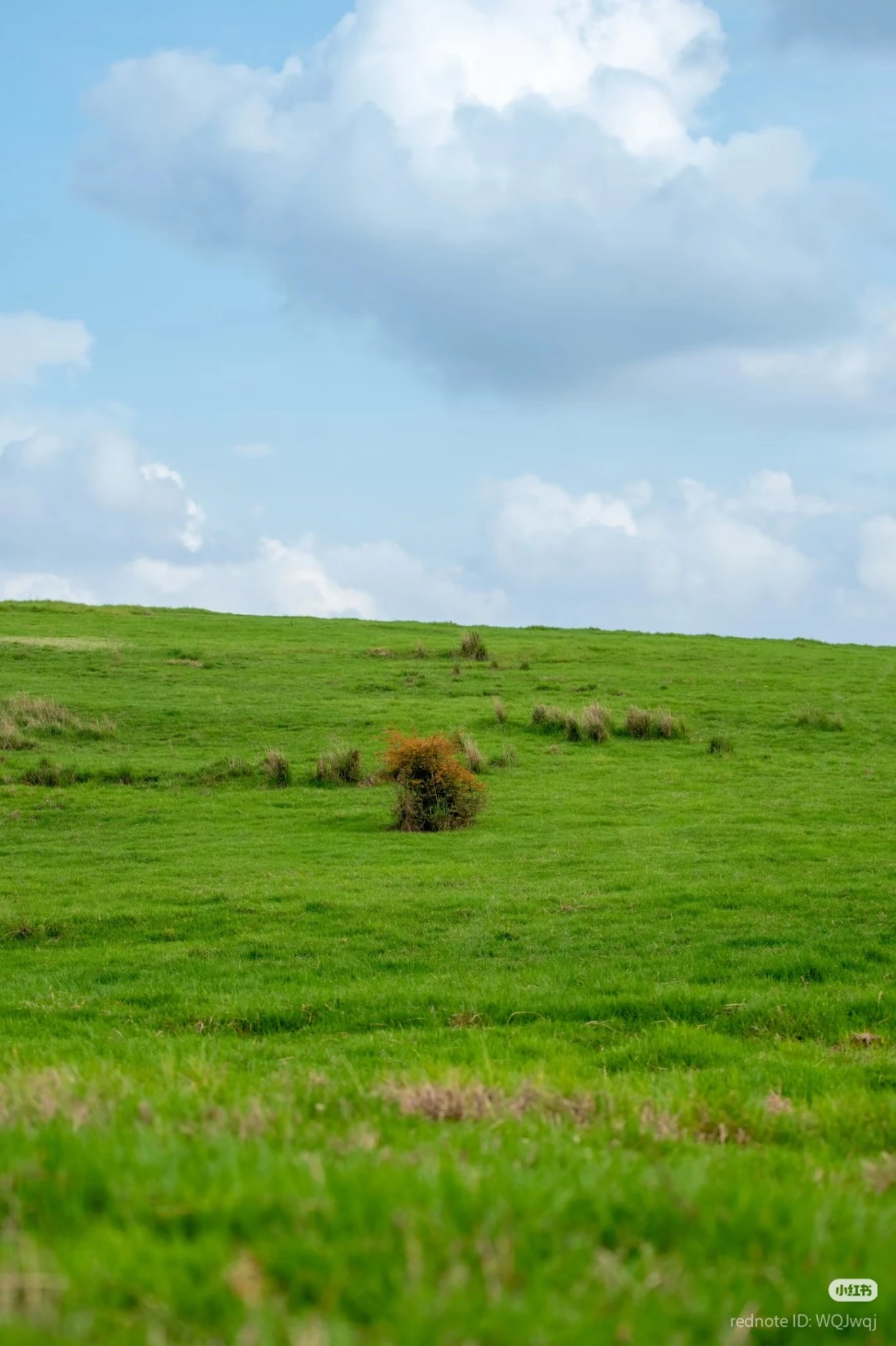
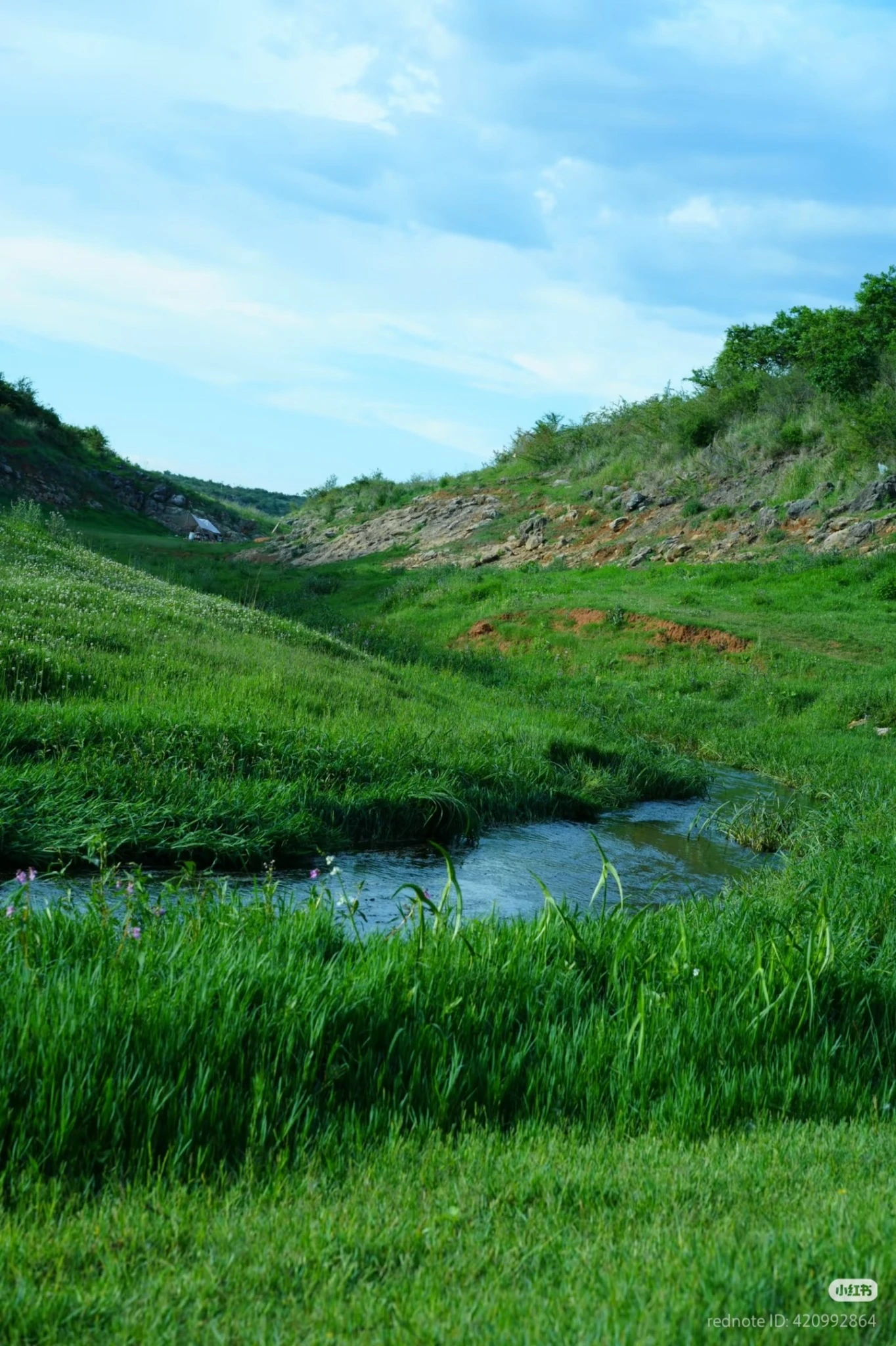
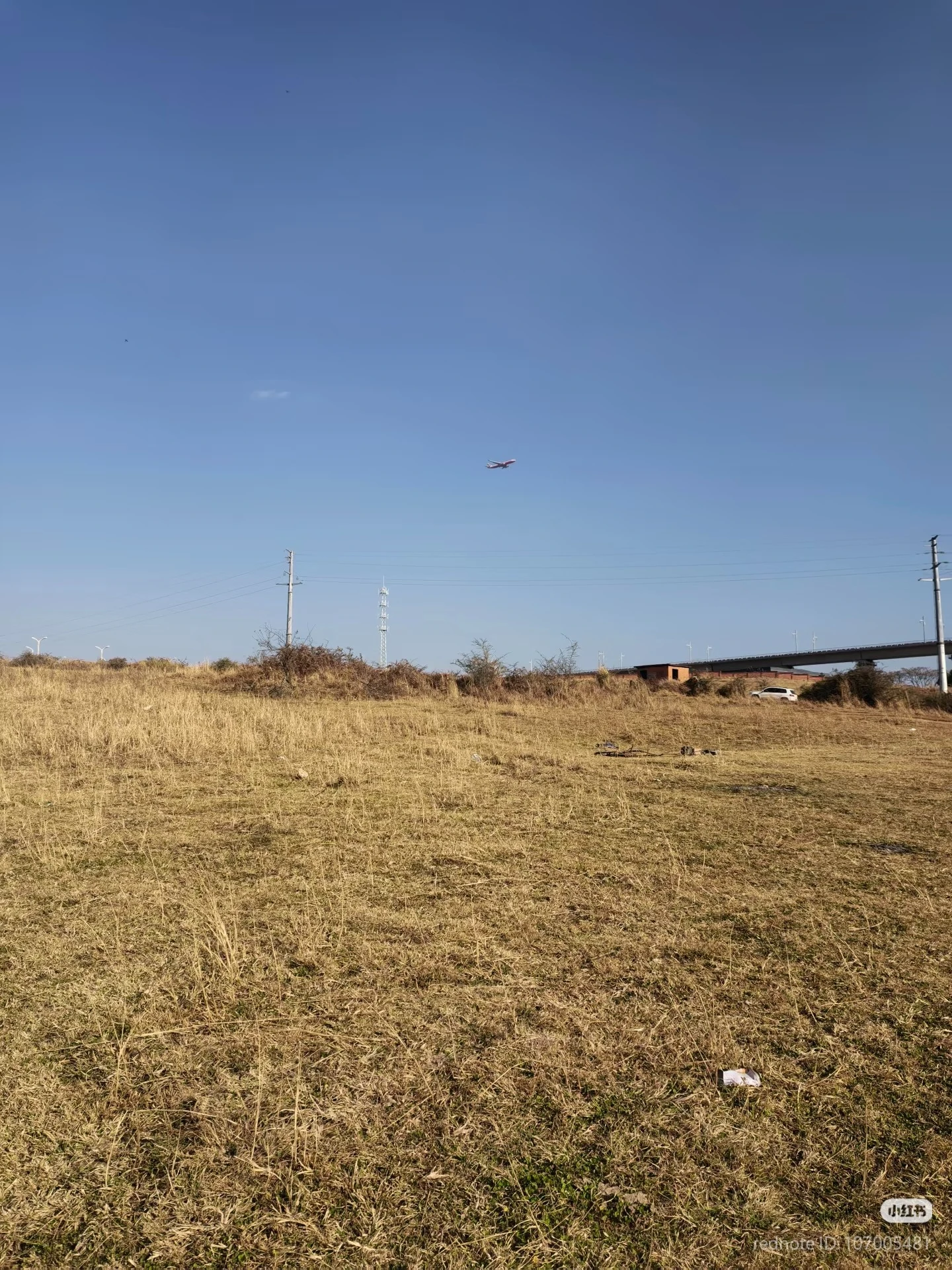
The former course has returned to pasture. Its open grassland is now used by many visitors for informal wild camping, from daytime outings to overnight stays.
Recent photographs show green slopes, a stream running through the grassland and drier, open ground near the airport. A RedNote camping account shared with Play Yunnan Golf also describes pitching tents here and choosing between staying overnight and returning to the city in the evening.
What was once a place to play a round has become a place to spend time outdoors.
The grounds today
A return to open country.
Recent views shared with Play Yunnan Golf
Grassland has reclaimed the playing landscape.RedNote · WQJwqjWater and grassland through the former grounds.RedNote · 420992864Open ground beneath the airport flight path.RedNote · original credit retained in photo
Photographs supplied from RedNote (Xiaohongshu); original creator marks retained. Images show the grounds today and are not assigned to individual golf holes.
About Kunming Meadow
Why was Kunming Meadow built?
A golf enthusiast created it with his staff to bring affordable golf to local people who could not afford the more traditional courses around Kunming. Its construction followed the existing pasture, and accessible prices remained part of its identity throughout its operation.
Where was the club?
Historical listings give the address as Xiaoshao Breeding Farm, Caoshan, Kunming: 云南昆明小哨种畜场草山.
Who designed it?
The club’s own 2013 profile credits the Meadow course design team. A 2016 Golf magazine feature describes the owner and staff creating the layout without a commissioned course architect, using the existing pasture contours.
Can I book a round here?
This is a historical archive entry. Meadow is not offered for booking through Play Yunnan Golf.
What are the former grounds used for today?
The land has returned to pasture and is used for informal camping, including day trips and overnight stays. It is no longer presented here as an operating golf course.
Sources and further reading
AIGolf · Supplied digital hole previews A1–A9 and B1–B9: hole pars and four tee yardages, transcribed and totalled for this page.
Club profile · 5 October 2013; club rate notice · June 2017; reopening announcement shared by 徐光茹 · 21 September 2020. Screenshots supplied to Play Yunnan Golf.
Historical photographs were taken before the course closure. Original photographers and media retain copyright. The photograph of the earlier eleventh matches the image captioned in Sina’s December 2010 report; other newly supplied photographs have no verified hole number or photographer. Historical specifications may reflect different stages of the club’s operation.
Present-day use: local information and three RedNote photographs supplied to Play Yunnan Golf, together with a screenshot of the camping post “半小时直达:昆明牧场高尔夫球会露营攻略” by 陈律师的徒步日记鸭. The post describes tent camping and overnight visits; the account is not an official campsite listing.
The founding purpose and commitment to affordable golf throughout operation also draw on local background supplied to Play Yunnan Golf. The 2016 magazine feature supports the owner-and-staff construction account; the dated price notices illustrate the club’s public-golf approach.
Continue through Yunnan’s golf history.
Discover more lost courses, or explore the courses you can play today.